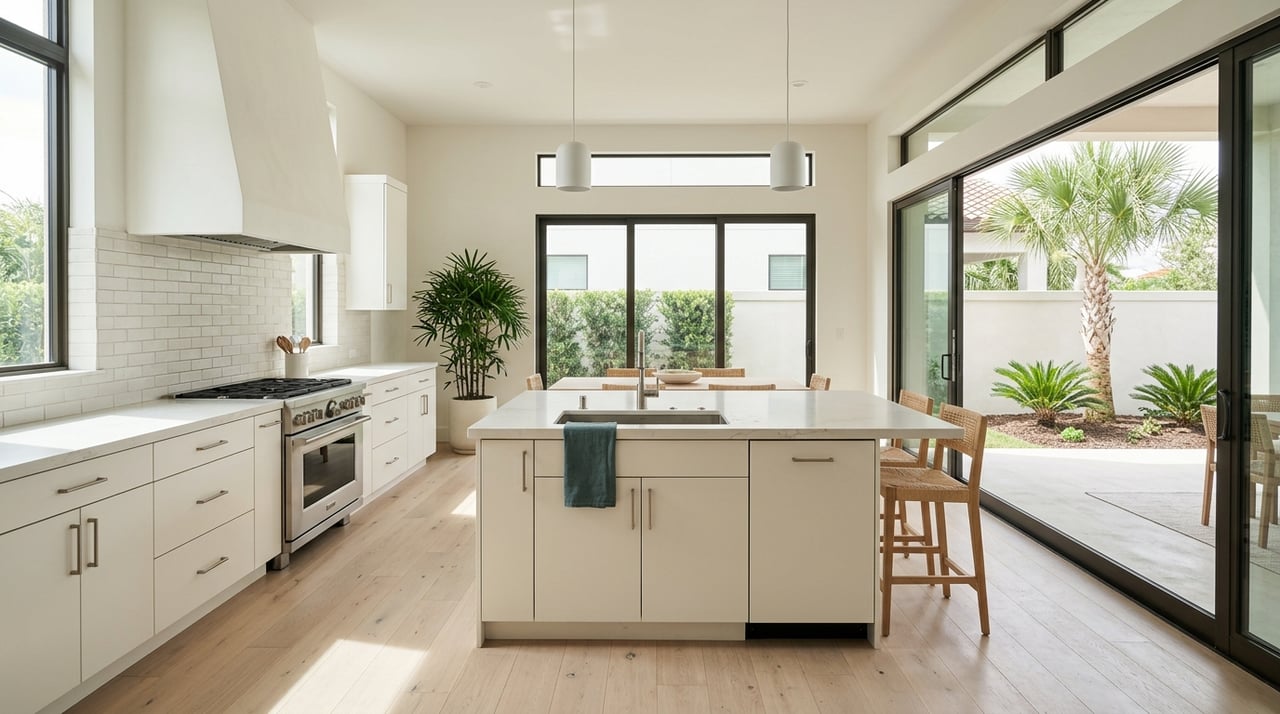
Brandon First Time Home Buyers Guide for Today’s Market
April 2, 2026
April 2, 2026
Wondering if buying your first home in Brandon still makes sense in today’s market? If you have been renting, watching rates, and waiting for the “perfect time,” you are not alone. The good news is that Brandon looks more workable for many first-time buyers than the ultra-competitive market of the past few years, and this guide will help you understand prices, financing, offer strategy, and common mistakes so you can move forward with more confidence. Let’s dive in.
Brandon is best described as a balanced to somewhat competitive market right now. According to Redfin’s Brandon housing market data, homes are selling in about 46 days, while Realtor.com’s Brandon market overview reported a median of 53 days on market and homes selling for about 1.98% below asking on average.
That matters if you are buying your first home. You are not stepping into the kind of market where every listing disappears overnight, but you also cannot assume every home will sit. Well-priced homes that show well can still move quickly, especially when they match what buyers want in a given price range.
Inventory is also more substantial than it was in tighter conditions. Zillow’s Brandon housing data showed 315 homes for sale and 78 new listings at the end of February 2026, while Realtor.com reported 513 homes for sale. In plain terms, you likely have more options and more room to compare before making a decision.
If you are trying to figure out whether Brandon fits your budget, the short answer is yes for some buyers, but you need realistic expectations. Based on Realtor.com neighborhood and ZIP code pricing in Brandon, entry-level pockets can start in the low-to-mid $200,000s, while many common single-family home options cluster in the low-to-mid $300,000s.
Neighborhood snapshots show medians from about $232,000 in Limona Improvement and $272,000 in Valhalla up to about $405,000 in Lakeview Village. ZIP-level medians include roughly $340,000 in 33510 and $399,400 in 33511. That range is a reminder that your experience in Brandon will depend a lot on the area, the property type, and the condition of the home.
A useful working expectation for many first-time buyers is this: starter-home opportunities exist, but many realistic Brandon options are in the $300,000s. If you are moving from renting, that gives you a more grounded starting point for savings goals and monthly payment planning.
For comparison, Brandon’s median rent is around $2,085 to $2,100 per month, according to Realtor.com. That does not mean owning will automatically cost less, but it does help you compare your current monthly housing expense with what ownership may look like.
Mortgage rates still play a big role in affordability. Freddie Mac’s Primary Mortgage Market Survey put the average U.S. 30-year fixed mortgage rate at 6.38% on March 26, 2026, and the 15-year fixed rate at 5.75%.
For many first-time buyers, the biggest surprise is that you do not always need 20% down. Low-down-payment options are still common. Freddie Mac’s down payment guide notes that some conventional loans go as low as 3% down, and FHA states that eligible buyers may qualify with as little as 3.5% down.
That said, a lower down payment does not mean lower total cost. The Consumer Financial Protection Bureau explains that buyers who put down less than 20% usually need mortgage insurance, and your monthly payment may also include escrowed property taxes and homeowners insurance.
Closing costs are another piece buyers often underestimate. The CFPB says they usually run about 2% to 5% of the purchase price, and it is common to pay the first year of homeowners insurance in advance at closing. That means your cash needed upfront is more than just your down payment.
Using a Brandon home price around the current median sale price of $345,000, 3% down works out to about $10,350. If closing costs fall between 2% and 5%, that adds about $6,900 to $17,250.
In other words, a low-down-payment buyer could be looking at roughly $17,250 to $27,600 in cash to close before you even factor in moving costs and your emergency reserves. That is why it helps to build your budget from the full picture, not just the advertised list price.
Monthly payment planning matters just as much. At a 6.38% 30-year rate, the principal and interest payment on a $345,000 purchase is about $2,089 per month with 3% down or about $1,723 per month with 20% down, before taxes, insurance, and PMI. Those added costs can significantly change what feels comfortable month to month.
It can be tempting to put every available dollar toward the purchase, especially when you are trying to compete. But the CFPB advises buyers to keep an emergency cushion of at least 3 to 6 months of expenses when deciding how much cash to use for a down payment.
That advice is especially important for first-time buyers. Once you own a home, unexpected costs do not stop at closing. A safer plan is to buy at a payment that leaves breathing room for maintenance, insurance changes, and normal life expenses.
If you are looking for help, Florida Housing may be worth exploring. The Florida Housing Homebuyer Program offers 30-year fixed-rate first mortgages through participating lenders and requires approved homebuyer education.
The program uses a first-time buyer definition of someone who has not owned and occupied a primary residence in the prior three years. It also lists a minimum 640 credit score along with county income and purchase-price limits, so you will want to confirm whether you qualify before relying on it.
You may also hear about Hometown Heroes. Florida Housing reported that all available 2025-2026 funding had been committed as of February 27, 2026, according to its program update. If you are hoping to use that assistance, verify current availability early in the process.
Before you start touring seriously, get preapproved. The CFPB explains that a mortgage preapproval letter can help show sellers you are a serious buyer, but it is not the same as a final loan approval.
Preapprovals are based on assumptions and may expire in 30 to 60 days. More importantly, just because you are approved for a certain amount does not mean that payment will feel comfortable in your everyday life. Your budget should lead the search, not the other way around.
In Brandon’s current market, a smart approach is to act quickly on homes that are priced well, while still recognizing that many listings have room for negotiation. Redfin reported price drops on 37.6% of listings, only 12.2% of homes selling above list price, and a 97.0% sale-to-list ratio. That tells you the market still rewards informed buyers.
A strong offer is not always the highest offer. Sometimes it is the cleanest, clearest, and most realistic one. In a market like Brandon, your goal is to stay competitive without giving up protections that matter.
The CFPB recommends keeping your financing contingency and inspection contingency unless the risk is very low and you have plenty of reserves. Those terms can protect you if your loan falls through or the home inspection reveals major issues.
It also helps to remember that an appraisal and an inspection are not the same thing. The lender generally requires the appraisal, but the home inspection is your chance to understand the home’s physical condition. If serious problems show up, your contract may allow renegotiation or cancellation.
Because Brandon pricing can vary widely by area, your offer strategy should match the specific home and neighborhood. A home in a lower-price pocket may attract one type of competition, while a home in a higher-priced area may behave differently. That is where local guidance can save you from guessing.
The most common mistake is focusing too much on the list price and not enough on the full monthly payment. Taxes, homeowners insurance, and mortgage insurance can all affect what you actually pay each month.
Another mistake is assuming the lowest down payment option is automatically the best one. The CFPB notes that lower down payment loans can lead to higher long-term costs, which is why it is smart to compare multiple loan offers instead of chasing the biggest approval number.
A third mistake is shopping before you understand your comfort zone. Just because you can qualify for a home does not mean you should buy at the top of your range. Your future self will thank you for leaving room in the budget.
If you want another layer of support while deciding whether you are ready to buy, the CFPB notes that you can speak with a HUD-approved housing counselor or contact the HOPE hotline. That can be helpful if you are trying to sort through affordability questions before you jump in.
First-time buyers rarely need more noise. What helps most is a clear plan, a realistic budget, and local insight on how one Brandon area may differ from another in price and pace.
Because Brandon is more balanced than overheated right now, you may have opportunities to negotiate, compare homes, and make thoughtful choices. At the same time, good homes can still move quickly, so preparation matters.
If you want a calm, informed path into Brandon’s market, working with a local team can help you line up financing, understand pricing by area, and structure an offer that fits both the market and your budget. When you are ready to take the next step, connect with Carter Company Realtors, Inc. for knowledgeable, neighborhood-focused guidance.


Whether you are looking to buy or sell a home, Carter Company Realtors has all the knowledge and tools to get the job done right, Work with us today!